


September is right on schedule.
Midterm election anxiety is rising. Bond yields are elevated. Oil is over $90 a barrel. And investors who felt comfortable in June suddenly do not.
The new month thus far brought an increase in day-to-day volatility. But overall, it might be considered a win as the S&P 500 only fell -0.90% month-to-date:
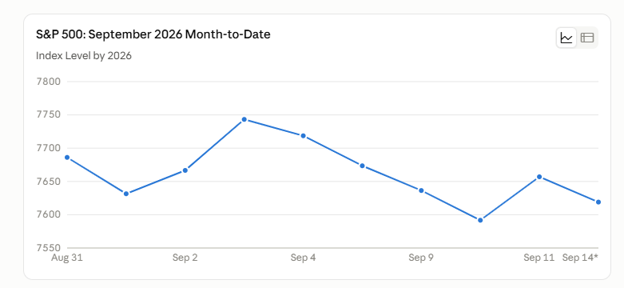
But none of this should be surprising. We at Cornerstone have been talking about this for months. So far, the midterm election year script is playing out.
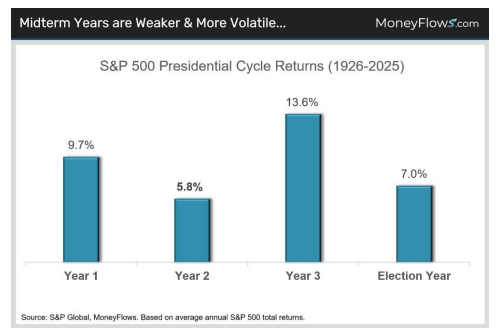
As a refresher, midterm election years are the bleakest of the four-year presidential cycle, averaging just a 5.8% return since 1926 with an average intra-year drawdown of 16%:
Still, as last week’s post pointed out, our readers are aware of some contrarian takes that could provide some unexpected support in September. One of those contrarian reasons has already begun to play out almost immediately after publishing last week’s blog post.
Specifically, Federal Reserve Governor Christopher Waller spoke with Reuters a week ago, signaling his support for a hold of interest rates in September.
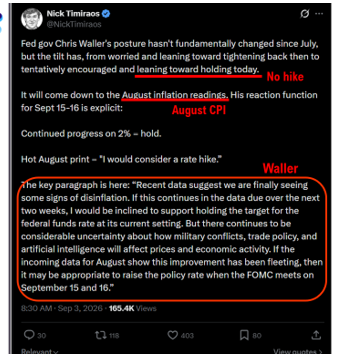
Previously, he was viewed as leaning towards a hike, so this was a surprise to markets. Waller’s rationale was disinflation forces are underway, so there doesn’t seem to be a reason to hike.
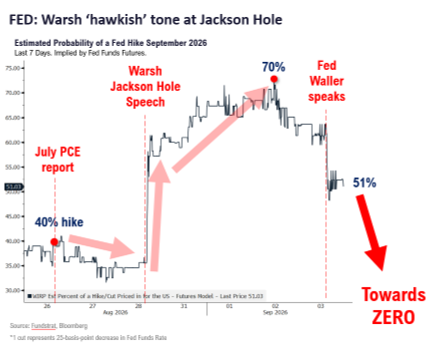
As our readers know, last week, our contrarian prediction was that the probability of a rate hike would drop quickly from the elevated 70% probability in advance of the Fed’s September announcement. Governor Waller's interview immediately dropped the odds of the September hike from 70% to 51% almost overnight.
One way or another, we think the final deciding factor was last Friday's August consumer price index report. August core CPI (excluding energy and food) was 0. 3%, bringing the year-over-year rate to 2.4%, both of which were slightly higher than expected. This quickly reignited the popular headline narrative that Chairman Warsh would hike short term rates later this week due to the recent strong August jobs report. To be clear, we believe this would be a mistake and unnecessary since any current elevated core inflation can be directly associated with short term or one-time inputs. Additionally, when combined with the fact that Waller said he expects core personal consumption expenditures to be revised downwards, it more or less takes any real long term inflation risk off the table, as of now. Thus, in our opinion, a rate hike would be reactive and not founded in the current underlying fundamental facts.
This is especially so once you understand that 33% of the current excess inflation for core PCE is attributed solely to flash memory. At 2.4% core CPI year-over-year, there's hardly any logical reason for the Fed to hike rates in 2026.
As this rate and inflation story plays out, if Waller's (and our) take comes to fruition, it raises the question of why Fed Chair Kevin Warsh’s comments at Jackson Hole were interpreted as hawkish. We think it’s easily explained by two points.
One, Warsh wants to establish Fed credibility but can later point to any soft core CPI reasons to hold. Two, he’s trying to establish independence from any White House pressure.
Rare Analyst Action
If the bear-ista’s thesis was more likely to play out than our contrarian take, it would be logical that the bear's concerns surrounding the market would be reflected in overall fundamental earnings and analyst earnings estimates. We already know how Q2 earnings closed out at unprecedented historical levels:
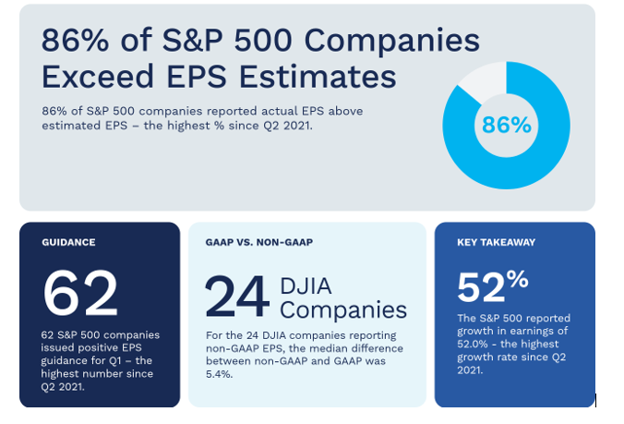
But with Q2 earnings wrapped up, as we enter the final month of Q3, we begin to look forward to gain an understanding of what we can expect in terms of fundamental corporate earnings strength. Specifically, during the months of July and August, analysts have now increased EPS estimates in aggregate for the third quarter by 1.2% from June 30 to August 31:
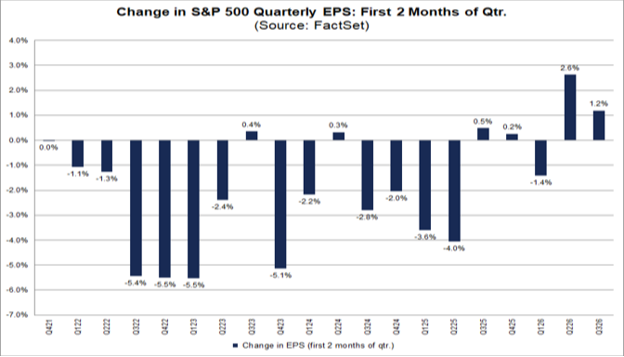
Keep in mind, in a typical quarter, analysts usually reduce earnings estimates during the first two months. It’s rare that they increase. In fact, here are the first two months’ average decline over various time horizons:
- Five years, -1.7%
- 10 years, -2.1%
- 15 years, -2.6%
- 20 years, -3.1%
This rare analyst estimate increase for Q3 now marks the second straight quarter that the bottom-up EPS has increased during the first two months of the quarter:
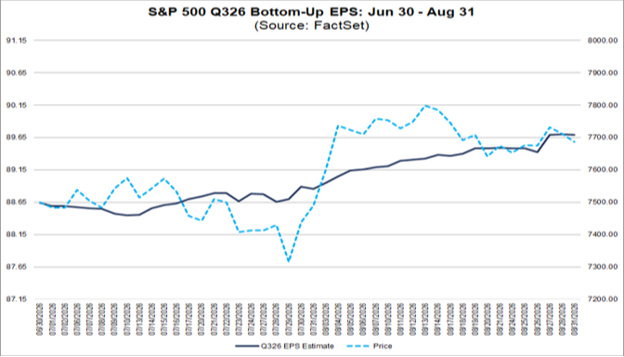
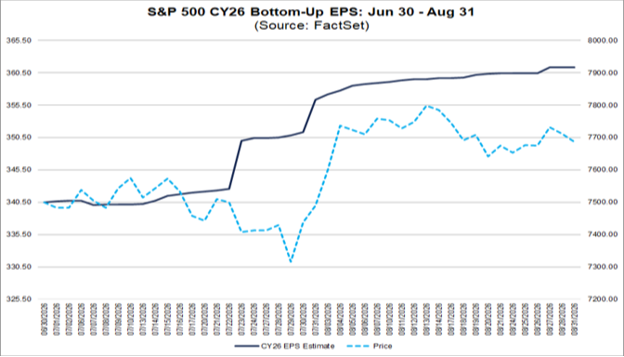
Those are the quarterly figures. Turning to full-year 2026 estimates, it’s even more important that analysts increased earnings estimates from June 30 through August 31.
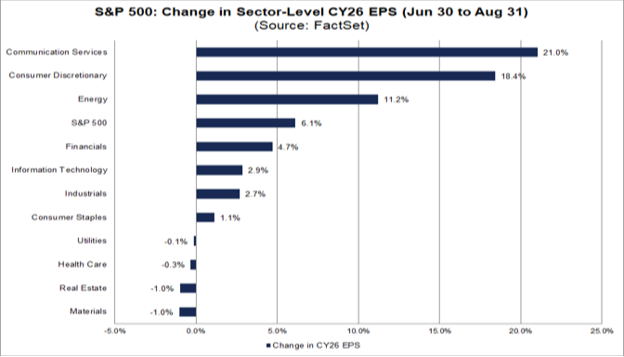
The calendar year 2026 bottom-up EPS increased by 6.1%, with seven of the 11 sectors recording an increase, leaving plenty of room for price expansion:
A Type of Fear Factor
As always, we look forward and not backwards because what matters most is what comes next. Remember, the midterm year weakness chart at the beginning of this post? What’s important now is we’re in the heart of the midterm season. So, let’s not focus on the overall historical weakness.
Instead, understand that history shows midterm years have averaged a 7% gain in the fourth quarter with an 88% positive rate once election uncertainty fades:
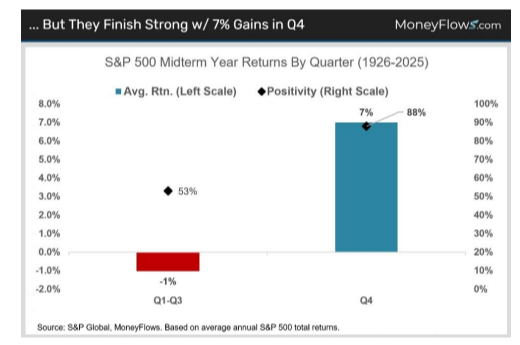
Furthermore, since 1950, the S&P 500 has averaged a 36% one-year forward return from its midterm lows. This historical data tells us that the current choppiness is merely the price of admission going forward.
Additionally, setting the stage for what we can expect to be a historically consistent strong fourth quarter, the current short interest for the median S&P 500 stock is elevated to its highest level since 2009:
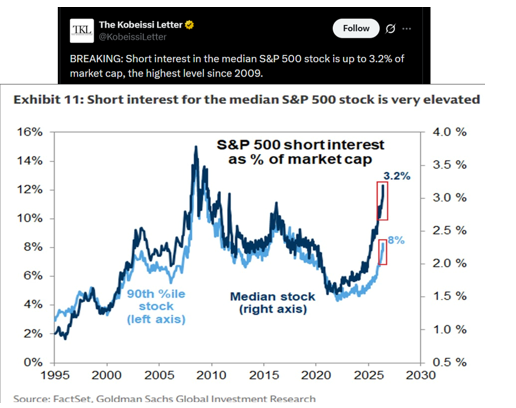
This matters because when you combine strong fundamentals and earnings to be reported through the remainder of this year, it’s clear how it will inevitably force an unwinding of these elevated short positions. That becomes rocket fuel on any market.
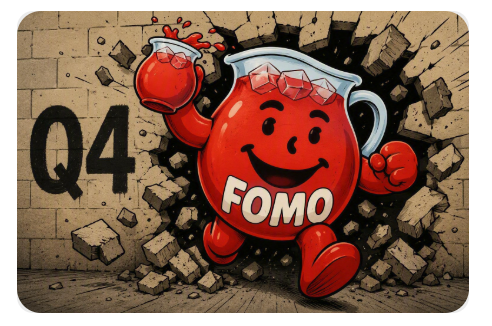
This combination of earnings and short interest unwinding sets the stage to consider the potential viability of a Q4 FOMO factor (fear of missing out). It could happen for both institutional and retail investors that are currently underinvested and don't want to get left behind going into the end of the year.
*Links to third-party websites are being provided for informational purposes only. CoreCap is not affiliated with and does not endorse, authorize, or sponsor any of the listed websites or their respective sponsors. CoreCap is not responsible for the content of any third-party website or the collection or use of information regarding any websites users and/or members.
*Past performance does not guarantee future results.
Securities sold through CoreCap Investments, LLC. Advisory services offered by CoreCap Advisors, LLC. Cornerstone Financial and CoreCap are separate and unaffiliated entities.