


We don’t often realize when we’re in the middle of technological and economic paradigm shifts. Psychologically, we can mostly attribute that to the difficulty of seeing through noise and emotions in our daily lives.
But if we're fortunate enough to pay attention and listen to those leading the way, we can take a step back with unnatural clarity and see the bigger picture, not the everyday noise around it. Two Wednesdays ago, we at Cornerstone believe one of those clear signals was present on Nvidia's earnings call.
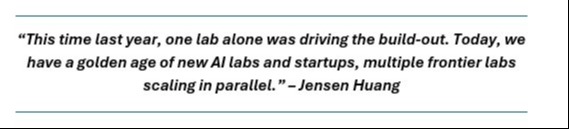
Specifically, CEO Jensen Huang said we are clearly at an “inflection point.” He made this comment as headlines seemingly were providing investors many reasons to worry.
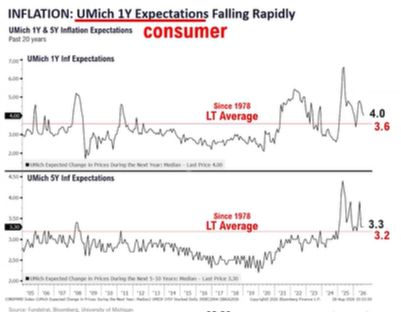
For instance, renewed trade tensions and consumer inflation expectations remaining elevated above long-term averages:
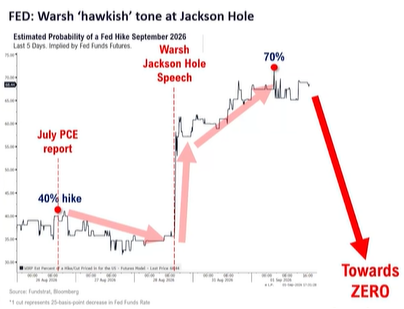
The futures market interpreted Federal Reserve Chair Kevin Warsh’s Jackson Hole speech as overly hawkish, albeit in our opinion unnecessarily so:
Non-farm payroll numbers came in much weaker than expected:
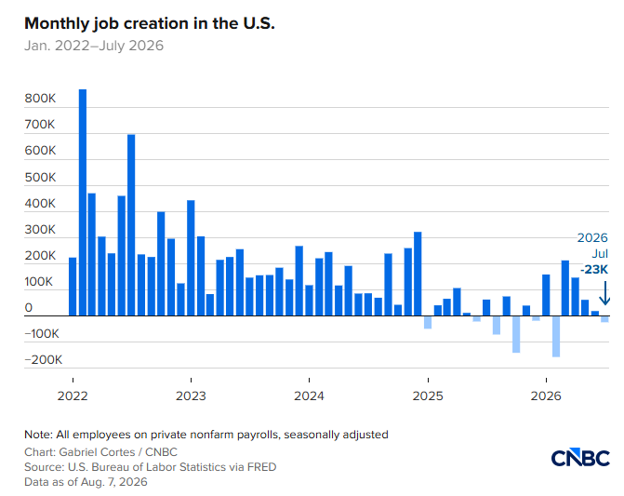
It caused rate hike expectations to jump alongside a rise in short-term yields and reactive pressure on stocks. Some would argue that every ingredient indicates a clear risk-off cycle.
But to us, as always, objective data remains critical. It should always outweigh headlines, especially during slow data periods.
And the biggest objective fundamental data story of them all remains Nvidia. The company reported revenue of $96.2 billion for the quarter (up 106% year-over-year), with data center revenue reaching $89 billion (up 117%).
The stock gained 8.7% on Thursday following Wednesday's post-close earnings announcement. It added $441 billion in market capitalization value in a day.
But the real surprise was the guidance. The company issued revenue guidance of approximately 70% year-over-year growth for 2028. That’s twice what analysts expected.
For context, Huang added, “AI has reached its inflection point. Tokens are productive and profitable. Compute is revenue. And demand is accelerating.”
In the days following these comments, we received further confirmation from three of the most important bottleneck memory suppliers that make AI possible:
- SK Hynix's CEO said global memory is heading for its worst ever supply shortage in 2027, with demand exceeding supply beyond 2030.
- Micron’s CEO said supply won't catch up with the AI-driven demand until at least the end of 2028.
- Samsung's EVP warned that constraints will become even more severe in 2027 and persist through 2028.
Keep in mind these companies together control over 90% of global memory DRAM supply, and they are all saying the same thing at the same time. This is not a memory trade, but a multi-year structural reality.
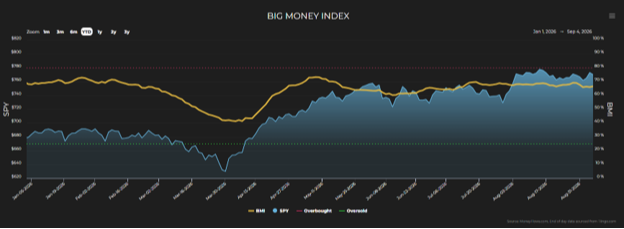
Thus, this is where the data begins to really shine. Even in the face of these headlines, we currently see MoneyFlows’s trusty Big Money Index (BMI) sitting right around 66.5%. It’s held steady in that range since the Situational Awareness flush out. Remember, the BMI is a 25-day moving average of institutional investor activity.
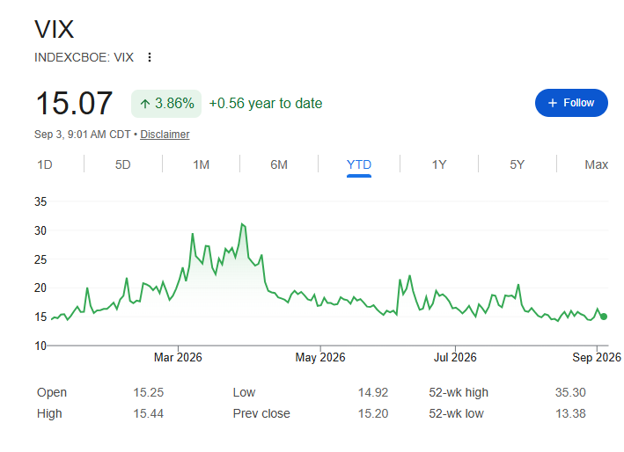
Additionally, we did not see any significant increase in volatility, per the CBOE Volatility Index:
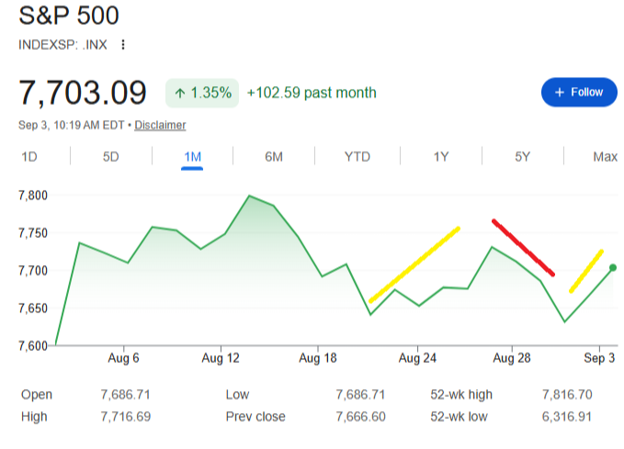
Even the emotional equity markets blinked quickly and seemingly shrugged off any of these bad headlines:
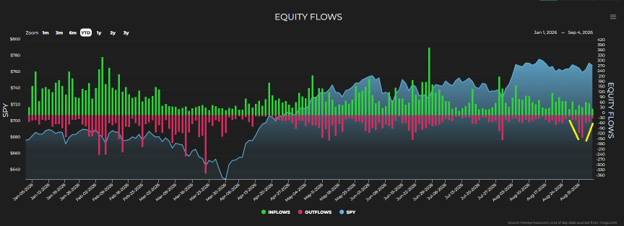
This action was consistent with a quick absorption of fear within institutional outflows over a mere two days before immediately drying up:
With football season starting, it seems appropriate to compare the market’s reaction of shoving off this blip to an NFL running back like Derrick Henry shrugging off a much smaller cornerback. The market absorbed every negative headline and kept on chugging.
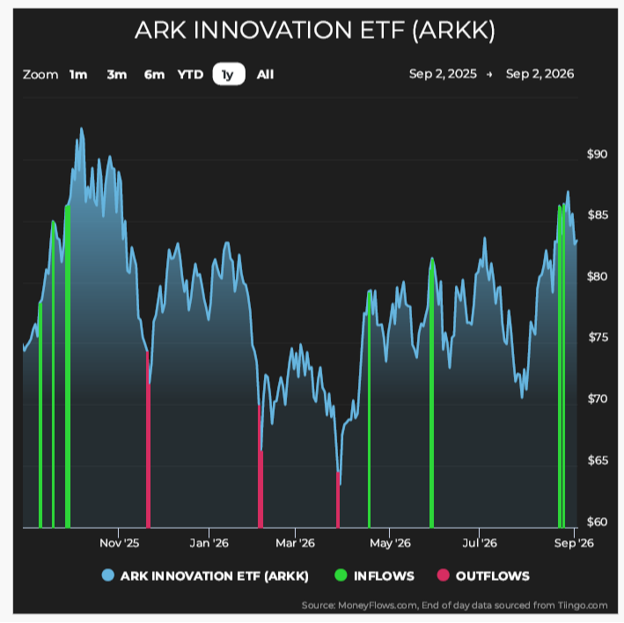
You could argue that exchange-traded fund flows told an even more complete story. For example, despite the headlines, there were significant inflows into risk-on ETFs like ARK Innovation:
And ARK Genomic Revolution:
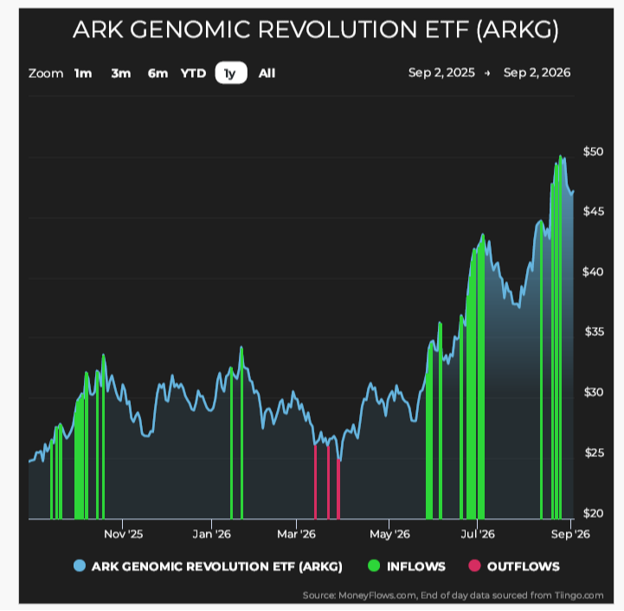
These inflows show the market quickly turned its attention to the fundamental inflection points pointed out by Huang. That is bullish, not bearish.
Taking a step back, sector flows confirm the underlying market behavior. Inflows were led by health care, energy, financials, materials, and technology:
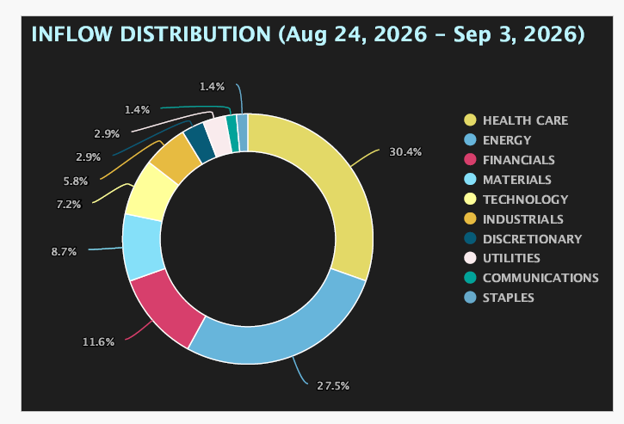
Health care is interesting because it’s now led inflows for 10 consecutive weeks, a streak without precedent. But if you consider where health care is quickly trending – to an agentic AI, research and development play – it’s not surprising. Health care has been one of the fastest adopters and beneficiaries of AI token productivity and profitability.
Underneath the surface, we're continuing to see top-ranked data stocks from subsectors like software, cybersecurity, and networking. These are the businesses generating recurring revenue from AI infrastructure and AI optimization. Companies like Fortinet, Palo Alto Networks, Salesforce, and Arista Networks are some examples.
And now throw on last week's news of Nvidia buying a leading open-source language learning model platform, Hugging Face. This move sets the stage for Nvidia to become the most vertically integrated of all vertically integrated companies.
It owns the entire stack from top to bottom: from chips to software to cloud and now all the way down to the base language learning models.
That’s an inflection point. Nvidia bought a platform that will allow it to compete with its customers. And their customers are ok with that. Really think about that dynamic for a minute.
The Situational Awareness and Citadel leverage overhang cleared. Nvidia further confirmed the demand picture. Now, technical momentum scores for the strongest businesses are poised to return to where the fundamentals always pointed.
When the world's largest AI chip company reports 106% revenue growth and guides 70% higher, it validates the demand for the entire stack – from optical networks, to memory, to chips, as well as the compute and software that monetizes it.
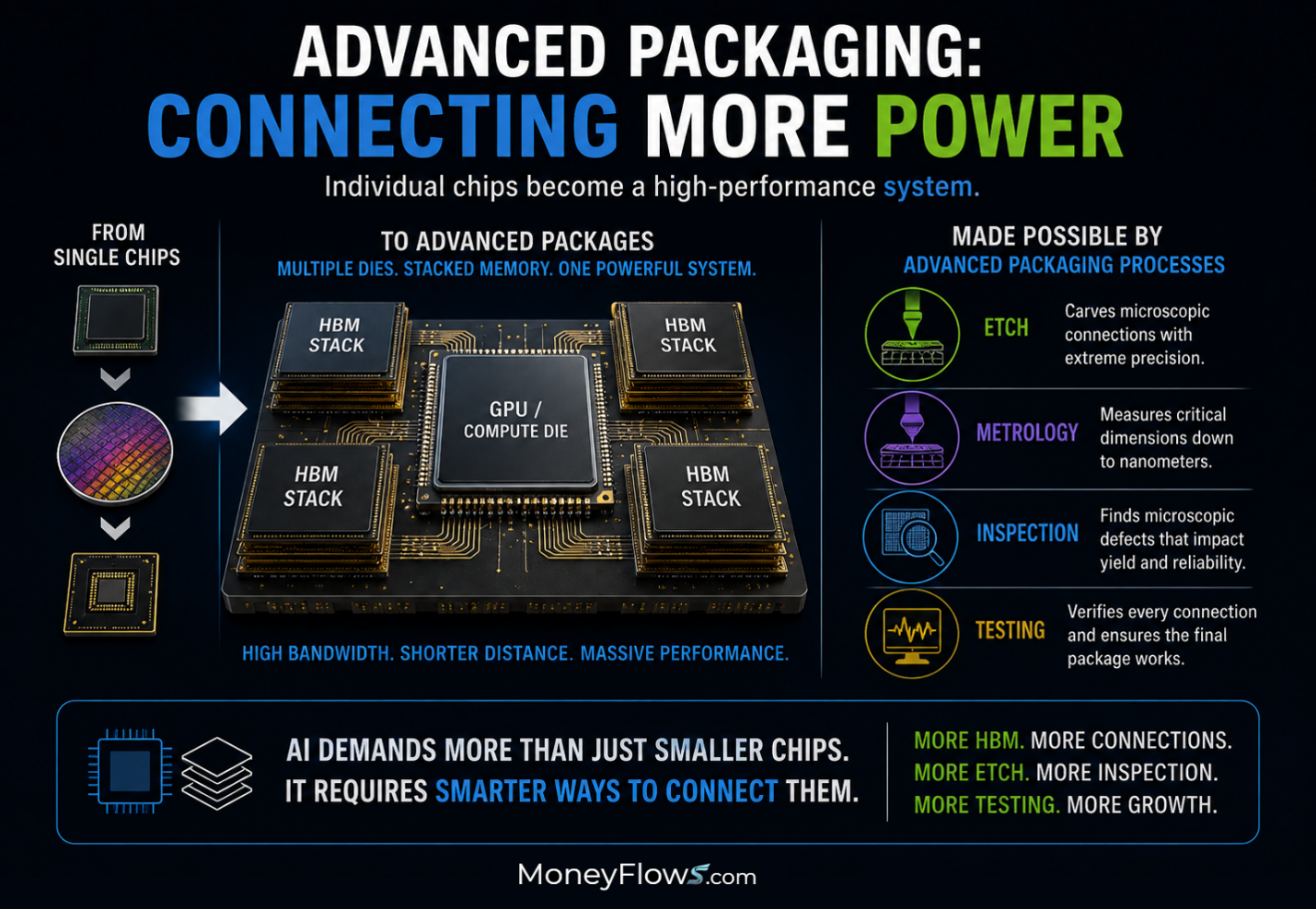
We’re in the heart of where the fundamental AI profitability thesis is being proven out. It’s here and it's accelerating. The biggest company's executives confirmed it.
CEOs confirm the demand. Earnings confirm the revenue. Flows confirm the conviction.
Recently, the noise has been loud. The data is now louder.
The market knows where it's going and doesn't need headlines to tell it to move. Even negative headwinds from headlines seemingly can’t dent this strong, fundamentally objective, data-based case for any materially prolonged period of time.
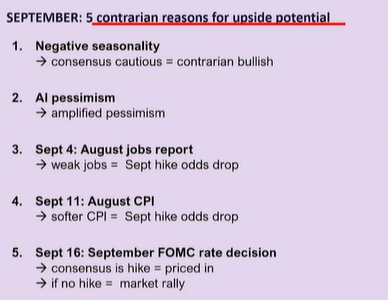
Instead, we believe it supports a contrarian thesis to the ongoing, negative September headlines.
*Nvidia, Arista Networks and Micron are owned in Cornerstone client accounts and by Daniel Milan personally
*Fortinet and Palo Alto Networks are owned in Cornerstone client accounts
*Samsung, Salesforce and SK Hynix are not owned by Cornerstone clients or Daniel Milan personally
*Links to third-party websites are being provided for informational purposes only. CoreCap is not affiliated with and does not endorse, authorize, or sponsor any of the listed websites or their respective sponsors. CoreCap is not responsible for the content of any third-party website or the collection or use of information regarding any websites users and/or members.
*Past performance does not guarantee future results.
Securities sold through CoreCap Investments, LLC. Advisory services offered by CoreCap Advisors, LLC. Cornerstone Financial and CoreCap are separate and unaffiliated entities.